
From Policy to Planet: India’s Trusted Partner for SWM 2026 Compliance Empowering Municipalities, Corporations, and...
Read MoreSusten Journal
Insights into the effort to preserve India's natural heritage. Stay updated on our latest conservation projects, community initiatives, and the strategic ways we are protecting the environment and translating SDGs into a reality.
Welcome to the Susten Journal
The official digital publication of the Society for Environment and Sustainable Development (SESD). This journal serves as our primary platform for sharing documented research, field updates, and expert perspectives on India's environmental landscape.
Needs Assessment & Science-Based Planning.
Community Engagement & Long-term Adoption.
Working directly with local citizens on green practices.
Data-Driven Monitoring & Impact Refinement.
Quick Access: 2026 Field Reports
The Aravallis: Protecting North India's Ancient Shield
Spanning over 692 kilometers, the Aravalli Range is one of the oldest geological features on Earth. It serves as a 2-billion-year-old defensive wall protecting the fertile plains of the NCR from the encroaching Thar Desert.
Our field investigation reveals a landscape under siege from illegal mining and fragmented policy, threatening the primary groundwater recharge zone for millions of residents.
Ancient
Shield
60-second visual investigation
Regional Audit Context
Mapping the Environmental Stress Points of North India
Our current investigations focus on the National Capital Region (NCR), a landscape defined by rapid industrialization and ecological vulnerability. The Aravalli Range serves as the backbone of this region, acting as a natural barrier against the Thar Desert and a primary source for groundwater recharge. However, the integrity of this "Ancient Shield" is being compromised by land-use changes that threaten the long-term climate resilience of Delhi and its satellite cities.
Moving from the natural barriers to the urban industrial core, our audit of Mundka highlights the human cost of unregulated industrial dust. This "Heavy Metal" air crisis represents a significant public health emergency that official data often fails to capture. Similarly, in Gadaipur, we document the intersection of livestock welfare and urban sanitation, proving that localized community action is the most effective model for sustainable waste management in 2026.
Beyond the Landfill: The Math of Individual Responsibility
Beyond the Landfill: The Math of Individual Responsibility Implementing SDG 12 through Government Mechanisms and...
Read MoreManual Waste Segregation vs Trommel: The ₹56 Crore Human Economy
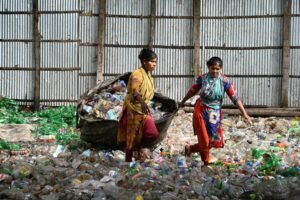
Manual Waste Segregation vs Trommel: The ₹56 Crore Human Economy The Micro-plastic Crisis: Why Mechanical...
Read More# Dedicated Waste Logistics: The 5-Truck, 5-Siren Protocol

# Dedicated Waste Logistics: The 5-Truck, 5-Siren Protocol Why the “One-Truck” system is the biggest...
Read MoreMundka’s

Toxic Air
60-second visual audit of industrial negligence
Mundka Air Crisis: 100+ Cancer Deaths & Industrial Dust
In the industrial periphery of West Delhi, a silent catastrophe is unfolding. Our field investigation in Mundka reveals a terrifying link between unregulated industrial dust and a cluster of over 100 cancer deaths within a single locality.
While the city focuses on seasonal smog, the residents here breathe "heavy metal" dust year-round. We documented the human cost of negligence that the official AQI sensors often miss.
Our Investigative Standard
Bridging the Gap Between Climate Data and Community Reality
At the Susten Journal, we believe that environmental journalism must be rooted in the soil. Our process begins with on-ground field audits across the National Capital Region (NCR), where our team documents the lived experiences of those on the front lines of ecological change. Whether it is the thinning Aravalli shield or the industrial dust of Mundka, we prioritize raw data over secondary reports.
Aravalli Range Audit Area
Community Case Studies
Real-Time Field Reporting
By integrating Web Stories for rapid visual consumption and long-form Journal Posts for deep-dive analysis, Susten creates a multi-layered archive. This ensures that policy accountability and Natural Conservation Zone (NCZ) protection remain at the forefront of the public discourse in India.
Saving Gadaipur’s Cows: The 110030 Project
In the heart of South Delhi’s rural-urban fringe, Gadaipur is leading a silent revolution in livestock welfare and public sanitation. What started as a local concern has evolved into a structured community initiative.
Our investigation explores how the "110030 Project" is integrating traditional dairy practices with modern waste management to create a cleaner, safer environment for both the cattle and the residents.
Gadaipur
110030
A 60-second look at the Gadaipur model
The Susten Methodology
The Susten Journal is an investigative archive documenting the rapid ecological shifts across North India. Our reporting model integrates on-ground field audits with data-driven storytelling to provide a transparent look at the environmental challenges facing the National Capital Region (NCR), Haryana, and Rajasthan.
From tracking the desertification risks in the Aravalli districts to auditing industrial air quality in West Delhi’s Mundka, we prioritize accuracy and community resilience. Every investigation serves as a record for policy accountability and public awareness in India's most vulnerable landscapes.
Regional Environmental Context
Our focus on the Aravalli Range stems from its role as the primary groundwater recharge zone for Delhi-NCR. By documenting illegal mining and the loss of Natural Conservation Zones, Susten provides the data necessary for long-term climate resilience.
In urban sectors like Mundka and Gadaipur, we bridge the gap between traditional livestock welfare and modern waste management, ensuring that local sustainability efforts are amplified on a global stage.
From Policy to Planet: Your National Partner for SWM 2026 Compliance
From Policy to Planet: India’s Trusted Partner for SWM 2026 Compliance Empowering Municipalities, Corporations, and...
Read MoreBeyond the Landfill: The Math of Individual Responsibility
Beyond the Landfill: The Math of Individual Responsibility Implementing SDG 12 through Government Mechanisms and...
Read MoreManual Waste Segregation vs Trommel: The ₹56 Crore Human Economy
Manual Waste Segregation vs Trommel: The ₹56 Crore Human Economy The Micro-plastic Crisis: Why Mechanical...
Read More# Dedicated Waste Logistics: The 5-Truck, 5-Siren Protocol
# Dedicated Waste Logistics: The 5-Truck, 5-Siren Protocol Why the “One-Truck” system is the biggest...
Read MoreOur Global Alignment
Local Evidence for Global Goals
The field investigations hosted in the Susten Journal are not isolated reports; they are part of a larger commitment to the United Nations Sustainable Development Goals (SDGs). Our work specifically audits progress toward Goal 11 (Sustainable Cities) and Goal 13 (Climate Action) within the Indian subcontinent.
By documenting the Aravalli ecological corridor and industrial air quality, we provide the raw data necessary for civil society to demand accountability. This mission is driven by the Society for Environmental & Social Development (SESD). You can learn more about our foundational values and long-term objectives on our About Us & Mission page.
Sustainable Cities
Climate Action
Life on Land
