-
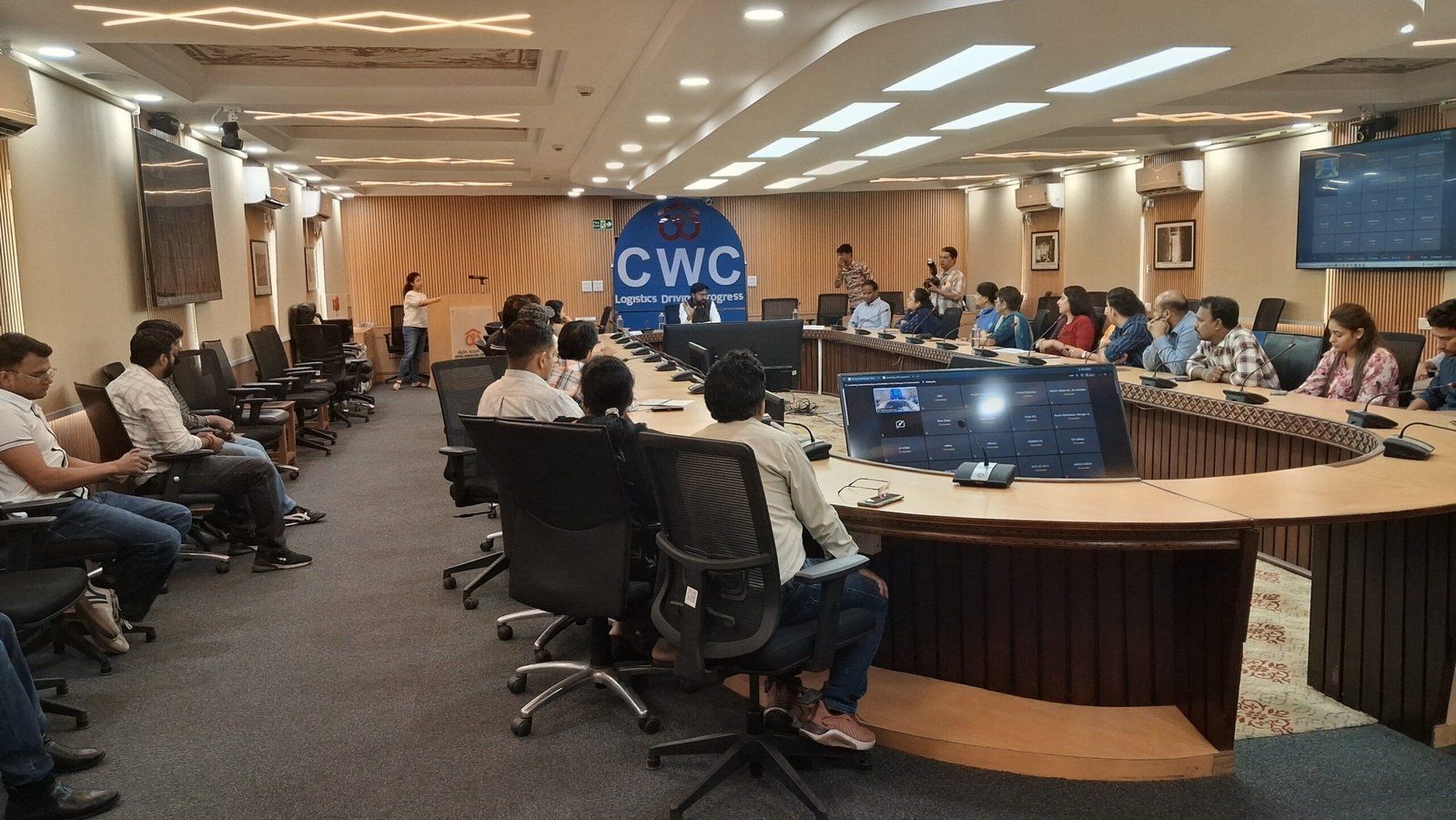
CWC & SESD: Advancing Green Warehousing Initiatives
Driving Corporate Decarbonization Across Large-Scale Supply Ecosystems
Environmental Compliance Event configurations dictate that in an economic era increasingly shaped by stringent timelines toward global net-zero targets, aligning commercial infrastructure with empirical environmental compliance has shifted from voluntary corporate reporting to an essential regulatory framework. To directly address this paradigm shift, the Society for Environment and Sustainable Development (SESD) designs high-level technical workshops, institutional interventions, and strategic capacity-building modules. These programs translate macro climate directives into localized, executable methodologies tailored explicitly for large distribution networks, administrative hubs, and resource-heavy operational landscapes.
Industrial warehousing yards, material transport nodes, and corporate containment facilities represent a critical, yet frequently under-addressed, footprint for intensive natural resource conservation. By deploying an integrated Environmental Compliance Event strategy, specialized engineering units can isolate empirical pathways to move toward carbon neutrality by analyzing structural footprints, baseline energy inefficiencies, and solid waste lifecycles within these expansive hubs. Scaling these structural interventions across regional supply footprints requires an active fusion of technical environmental engineering and coordinated corporate governance.
During each planned Environmental Compliance Event session, specialized focus is allocated toward tracking greenhouse gas protocols, auditing water intake dependencies, and minimizing secondary packaging waste streams. When industrial facilities take part in a comprehensive Environmental Compliance Event program, they unlock access to predictive modeling tools that turn standard logistical bottlenecks into streamlined paths toward eco-efficiency.
Aligning Corporate Mandates with Statutory Guidelines and Mission LiFE
A primary focus of SESD’s institutional strategy involves bridging strict national regulatory mandates with the daily operational mechanisms of commercial networks. With the regular deployment of updated compliance frameworks under the statutory Central Pollution Control Board (CPCB) guidelines, public and private sector enterprises face rigorous updates to their infrastructure. Organizing an ongoing Environmental Compliance Event framework helps fundamentally reshape systemic waste streams to match modern parameters of mandatory source segregation, extended producer responsibility (EPR), and circular raw material processing loops.
These collaborative interventions deeply integrate the principles of India’s national Mission LiFE (Lifestyle for Environment) framework. This behavioral shift initiative seeks to transition mass consumption habits away from thoughtless utilization toward conscious, scientific preservation patterns. When systematically scaled within large corporate frameworks through a targeted Environmental Compliance Event, this methodology empowers administrative departments, operations managers, and facility supervisors to actively identify ecological liabilities within their day-to-day work routines.
“True sustainability within large-scale commercial organizations requires moving completely past simple eco-awareness. We must transition corporate governance into an ecosystem of measurable, audited data tracking, where every layer of resource consumption is balanced by an identical operational commitment to zero-waste protocols.”
— Technical Advisory Board, SESD Research CouncilFurthermore, these technical assemblies establish operational links to realize the targets outlined under SDG 12 (Responsible Consumption and Production) and SDG 13 (Climate Action). By tracking the path of raw materials and spatial waste across expansive commercial yards, environmental teams can provide concrete insights on how entities can convert potential environmental risks into green assets. This optimization process centers on establishing localized containment zones, deploying zero-plastic mandates within corporate boundaries, and adopting certified material recovery systems.
Ultimately, this structural blueprint demonstrates the power of SDG 17 (Partnerships for the Goals). Combining the technical, scientific expertise of an empirical NGO like SESD with the physical infrastructure of expansive corporate networks proves that scalable climate resilience is fully achievable. The insights gathered during these specialized training programs provide a clear roadmap for organizations looking to scale down their operational footprint while maintaining peak workplace efficiency.
A Definitive Framework for Zero-Emission Supply Chains & Green Warehousing
As national distribution channels scale up to match economic growth, the absolute carbon footprint of supply systems necessitates active, scientific intervention. Building upon the primary data models established during our environmental optimization audits, the **Society for Environment and Sustainable Development (SESD)** has designed a progressive, scalable roadmap. This blueprint functions as a comprehensive operational guide for converting extensive cargo yards and logistics spaces into net-zero environmental hubs, establishing a clear precedent for public-private ecological collaborations.
The baseline metrics gathered from extensive administrative reviews highlight a recurring challenge: standard operations often deal with unrecognized energy leaks, unmonitored packaging waste streams, and thermal inefficiencies. To systematically resolve these vulnerabilities, our technical Environmental Compliance Event outlines long-term action plans centering around three critical pillars: technical carbon auditing, decentralized circular infrastructure setup, and data-driven worker training programs. By deploying these protocols directly into existing commercial setups, enterprises significantly drop their long-term environmental liability while preserving operational value.
Deploying Blue-Green Infrastructure (BGI) and Closed-Loop Circular Systems
A cornerstone of this structural transformation is the integration of advanced **Blue-Green Infrastructure (BGI)** across expansive facility profiles. Industrial structures naturally feature massive horizontal footprints, such as continuous warehouse rooftops and wide asphalt logistics staging yards. Instead of letting these surfaces function as heat-absorbing islands, the framework presented at our Environmental Compliance Event transforms them into functional, climate-resilient zones. This physical shift involves setting up decentralized solar panel frameworks, integrating passive greywater filtration swales, and planting native environmental buffers to stabilize regional microclimates.
At the same time, maintaining a strict material separation pipeline remains absolutely critical to satisfy modern statutory requirements. By rolling out a **four-stream resource segregation system** at every intake, processing, and fulfillment checkpoint, facilities can intercept tons of industrial polymers, commercial corrugated fibers, and organic waste before they enter regional landfills. Executing this system alongside an Environmental Compliance Event schedule aligns with the operational targets required under local pollution control guidelines, protecting organizations from environmental non-compliance fees while channeling useful secondary resources back into the circular economy.
Phase 1: Audits via Environmental Compliance Event
Conducting highly technical energy, water, and solid waste baseline evaluations across regional logistical hubs to isolate structural climate inefficiencies.
Phase 2: Decentralized Upgrades
Installing onsite scientific composting modules, rainwater harvesting channels, and zero-plastic policies across all commercial boundaries.
Phase 3: Behavioral Scaling
Institutionalizing Mission LiFE metrics via continuous capacity-building workshops for administrative staff, supervisors, and regional operators.
True sustainability within national corporate entities requires transforming structural habits at a human level. Aligning organizational work culture with India’s national Mission LiFE parameters ensures that on-ground personnel become active partners in climate action. Educating workforces on scientific waste management, energy conservation protocols, and resource tracking through an Environmental Compliance Event turns sustainability from an administrative mandate into a daily operational habit.
Looking forward, the Society for Environment and Sustainable Development remains dedicated to offering deep empirical oversight, technical advisory tools, and environmental auditing support to industrial networks ready to embrace this transition. By anchoring corporate strategies within proven scientific frameworks established at each Environmental Compliance Event, India’s vital supply chain nodes can effectively advance toward net-zero targets—proving that national economic development and profound climate stewardship can thrive together.