Restoring Rainwater Systems in Kalkaji
A collaborative initiative by Susten and ARWA to secure Delhi’s groundwater levels. We are cleaning and auditing infrastructure for monsoon readiness.
Impact Report: Water Security
Aravali Apartments RWH Case Study: Reclaiming the Water Table
The Aravali Apartments RWH Case Study highlights a transformative journey from civic apathy to environmental leadership. By mobilizing residents for a targeted cleaning drive, SESD NGO proved that water security is achievable through collective effort.
Aravali Apartments RWH Case Study: Visual Story
See the immersive Aravali Apartments RWH Case Study in action through our full-screen vertical experience.
SESD NGO × Aravali Apartments (ARWA)
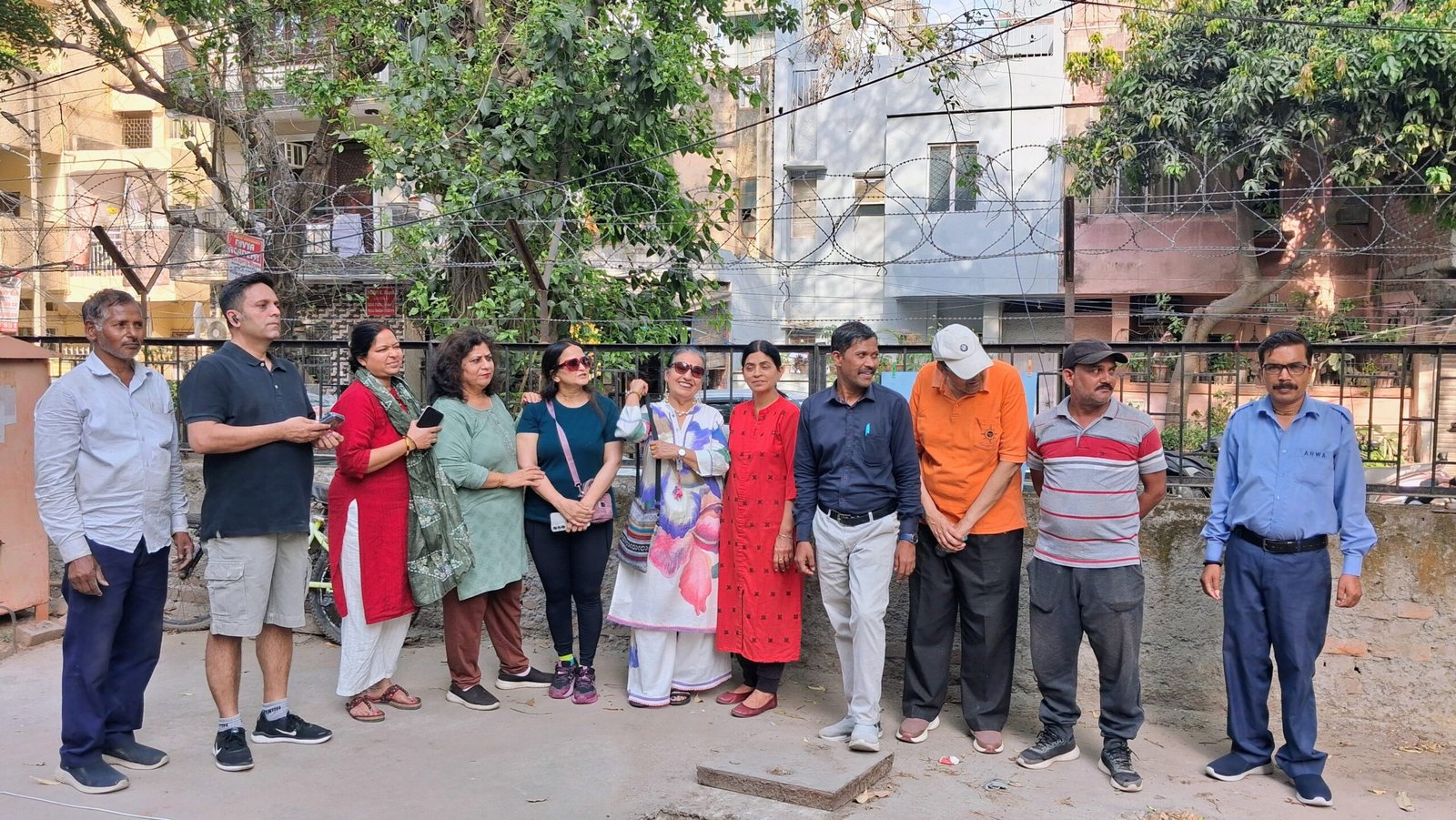
On May 17, 2026, a remarkable transformation unfolded at a residential complex near Kalkaji, New Delhi. In partnership with the Society for Environment and Sustainable Development (SESD NGO), the Aravali Apartments Residents Welfare Association (ARWA) organized a grassroots Rainwater Harvesting Cleaning Drive.
What began as a logistical challenge regarding maintenance infrastructure concluded as a profound case study in public mobilization, behavioral psychology, and decentralized water security.
The Ground Reality of Urban Water Assets
New Delhi’s groundwater table is under catastrophic stress. As concrete blankets the metropolis, heavy monsoon downpours turn into destructive urban flooding rather than recharging our depleted aquifers. While many housing societies have legally mandated Rainwater Harvesting (RWH) structures, a vast majority suffer from systemic neglect.
Status: Choked
Tons of compacted silt and organic debris blocking natural recharge.
When an RWH system is blocked, it ceases to be an environmental asset; it becomes a dead infrastructure investment. At Aravali Apartments, these assets were on the verge of total failure before the SESD intervention.
The SESD Principle
“True sustainability cannot be gifted or outsourced; it must be built through localized equity.”
Initial discussions between the RWA and SESD NGO mirrored a classic roadblock in urban governance: the reliance on paid external labor versus the perceived lack of localized budgets. SESD stood firm on a core principle: Community Ownership.
2 Hours of Collective Sweat
Technical Workflow
Mapping the “Happiness Dividend”
To measure the psychological impact of grassroots action, SESD NGO conducted a localized behavioral experiment. Participants anonymously rated their fulfillment on a scale of **1 to 10** before and after the drive.
Resource Harvest: The extraction revealed high-quality fertile soil rather than silt. The society repurposed all **20 tons** of recovered earth to nourish the residential gardens.
| Participant Group | Pre-Drive | Post-Drive | Growth |
|---|---|---|---|
| Youth & Children Volunteers | 6.5 | 9.0 | +2.5 |
| Adult & RWA Core Members | 7.0 | 9.5 | +2.5 |
Antidote to Despair
In an era defined by “eco-anxiety,” the Kalkaji drive proved a vital psychological truth: Action is the antidote to despair.
When citizens contribute physical “sweat equity” to protect their immediate habitat, collective joy and communal bonding replace civic apathy.
A Replicable Blueprint for Delhi’s RWAs
The success at Aravali Apartments provides a crucial framework for thousands of residential clusters across the National Capital Region (NCR) as they brace for changing monsoon patterns. The initiative proved three fundamental truths:
Financial vs. Prioritization Constraints
Communities possess the intrinsic resources to maintain their infrastructure when mobilized correctly. Budget gaps are often bridged by Collective Will.
NGOs as Catalysts, Not Contractors
The role of SESD is to provide technical auditing and strategic mobilization, not to displace community responsibility. Sustainability cannot be outsourced.
Children as Anchors of Shift
Engaging families ensures that water conservation practices permeate from the RWH pit back into individual households, creating a generational shift in behavior.
End of Report
Documenting the shift from civic apathy to climate action.
“This drive has set a baseline of accountability. The society is no longer just a collection of apartments; it is a self-healing ecosystem.”
SESD NGO calls upon RWAs across Delhi to look beneath their pavements. Your rainwater harvesting pits are your insurance policy against a water-scarce future.
Stop waiting for external interventions. Grab a rope, gather your neighbors, and reclaim your water security.
Start a Movement in Your Neighborhood
Partner with SESD NGO for technical SWM audits or community-led environmental mobilization drives.
Visit our Portal: susten.org.inA Blueprint from the Aravali Apartments RWH Case Study
This Aravali Apartments RWH Case Study provides a crucial framework for thousands of residential clusters across the NCR. It aligns with global standards like the UN Sustainable Development Goal 6 for clean water and sanitation.
Technical Accountability
The Aravali Apartments RWH Case Study proves that community resources, when audited by a Sustainable Development NGO, can maintain complex infrastructure.
Long-term Impact of the Aravali Apartments RWH Case Study
The data points established in this Aravali Apartments RWH Case Study will serve as a baseline for future monsoon audits. Beyond the physical desilting, the Aravali Apartments RWH Case Study has fostered a new sense of ownership among residents. We believe the Aravali Apartments RWH Case Study model is the most cost-effective way to recharge Delhi’s groundwater.